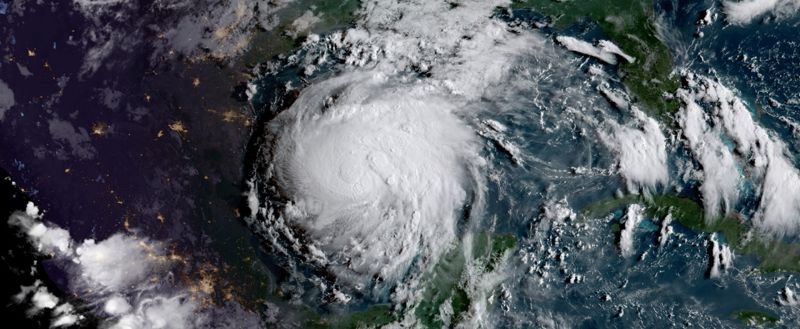
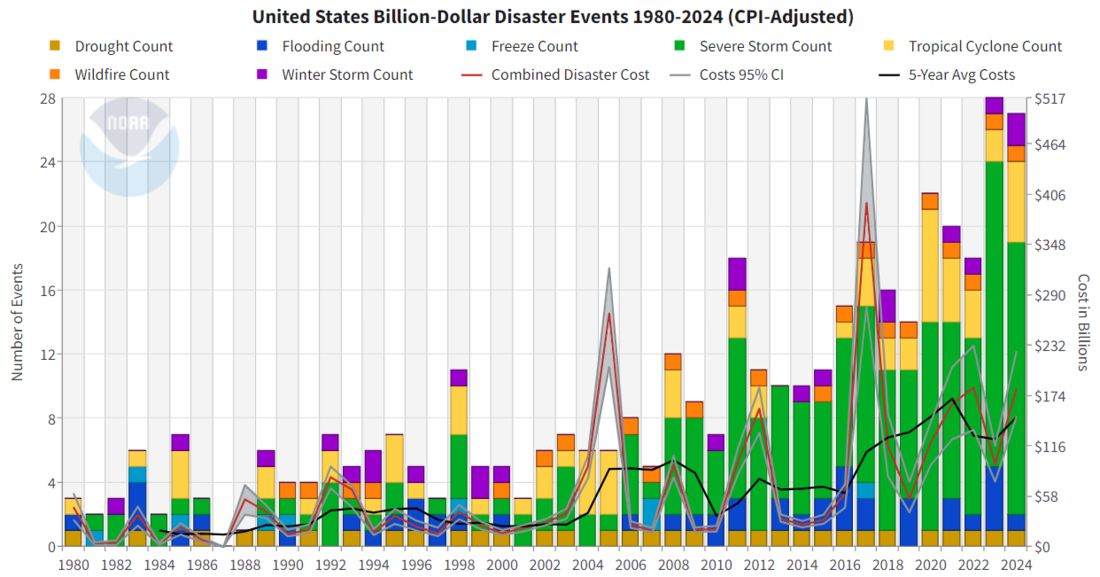
A major challenge for anticipating climate change impacts is that these are very dynamic and difficult-to-predict physical systems. This non-linear unpredictability is a feature of vicious cycles that produce surprisingly fast changes, increasing the chances of rapid negative tipping points that coastal socio-economic systems are not prepared for (e.g., National Academy of Sciences, 2002; Wunderling et al. 2024).
Rapid changes in large climate and ecological systems are well-documented, (National Academy of Sciences. 2002.). Triggering tipping points in one system can increase the risk of crossing thresholds in others (e.g., Rocha et al. 2018). Multiple global ocean systems are of concern, examples that involve east Florida include a) the potential for rapid sea level rise from abrupt melting increases on the Western Antarctic Ice Sheet or Greenland, and b) accelerated changes in the Atlantic Meridional Overturning Circulation and the Gulf Stream (IPCC, 2019).